

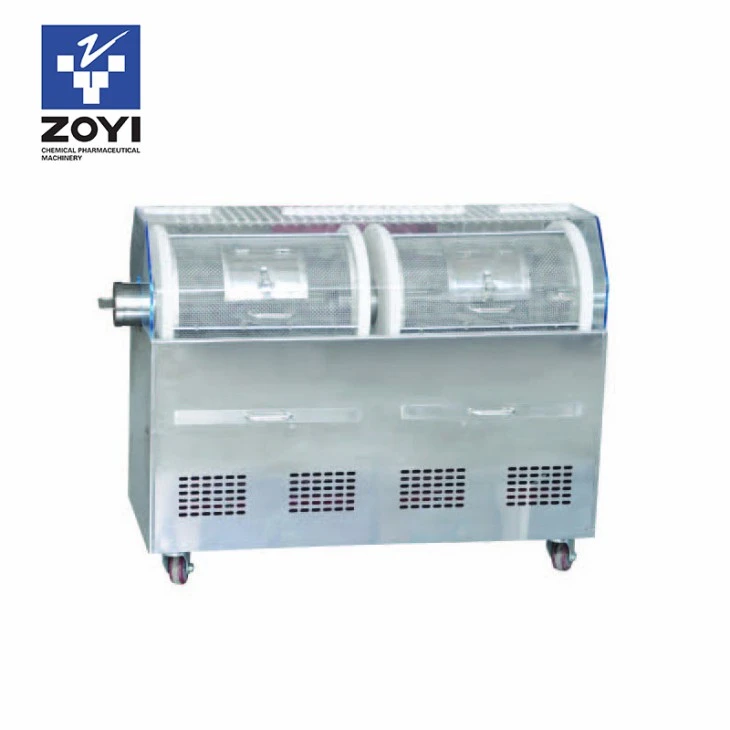
Motor failure
1. The motor does not start
Power supply problem: The power may not be connected, the fuse may be blown, the power line may be broken, etc., resulting in the motor not being able to obtain normal power supply.
Motor winding failure: Winding short circuit, open circuit or ground fault will prevent the motor from forming a normal rotating magnetic field and thus cannot start.
Control circuit failure: If the control components such as contactors and relays are damaged, or the control circuit fails, the start signal cannot be correctly transmitted to the motor.
2. Motor overheating
Overload operation: The Capsule Tumbler Dryer load exceeds the rated load of the motor, causing the motor to be in a high-load working state for a long time and generate too much heat.
Poor heat dissipation: Damage to the motor cooling fan, excessive dust accumulation on the motor surface, or poor ventilation at the installation location will affect the heat dissipation effect.
Motor failure: Faults such as motor winding short circuit and inter-turn short circuit will cause the current to increase and cause the motor to overheat.
3. Excessive motor vibration
Motor imbalance: The motor rotor has poor dynamic balance, which will generate a large centrifugal force when rotating, causing the motor to vibrate.
Installation problems: If the motor installation foundation is not firm, the anchor bolts are loose, or the motor is not tightly connected to other components, the motor will vibrate during operation.
Bearing problems: If the motor bearing is worn, damaged, or poorly lubricated, the gap between the motor rotor and the stator will be uneven, causing the motor to vibrate.
Bearing failure
1. Bearing overheating
Insufficient or poor lubrication: If the bearing is short of oil, the lubricating oil is deteriorated, or the model is not suitable, it will increase the friction of the bearing and generate too much heat.
Improper installation: If the bearing is installed too tight or too loose, the internal stress distribution of the bearing will be uneven, and additional friction and heat will be generated during operation.
Excessive load: The radial or axial load borne by the bearing exceeds its rated load, which will accelerate the wear of the bearing and cause the temperature to rise.
2. Abnormal noise of the bearing
Bearing wear: After long-term use, the rolling elements, raceways and other parts of the bearing will wear, resulting in noise during operation.
Bearing damage: If the bearing ball is broken or the retainer is damaged, the bearing will make abnormal noise during operation.
Foreign matter entering: Dust, debris, etc. entering the bearing will affect the normal operation of the bearing and produce abnormal noise.
3. Bearing lock
Severe lubrication problems: Long-term lack of oil or failure of lubricating oil in the bearing will cause direct contact between the metal parts of the bearing, resulting in severe wear and eventually locking.
Overload or impact: The bearing is subjected to excessive load or sudden impact, which may cause the bearing to deform, damage, and then lock.
Transmission device failure
1. Belt transmission failure
Belt slippage: Insufficient belt tension, belt wear, or oil stains on the pulley surface will reduce the friction between the belt and the pulley, causing slippage and affecting power transmission.
Belt breakage: After long-term use, the belt will age and crack, and excessive load or uneven tension will easily lead to belt breakage.
Belt deviation: Non-parallel installation of pulleys, uneven belt quality or uneven tension will cause the belt to deviate during operation, accelerate belt wear, and even cause the belt to fall off.
2. Chain transmission failure
Loose chain: After a long period of use, the chain will stretch due to wear, causing the chain to loosen, and there will be phenomena such as tooth skipping and chain derailment, which will affect the transmission accuracy and stability.
Chain wear: Long-term friction between the chain and the sprocket will cause wear of the chain links, rollers and other components of the chain, reducing the strength and transmission efficiency of the chain.
Sprocket damage: Wear, deformation, and breakage of the sprocket tooth surface will cause poor meshing between the chain and the sprocket, generate noise and vibration, and affect the transmission performance.
3. Gear transmission failure
Gear wear: During the long-term meshing transmission process, the gear tooth surface will wear, resulting in reduced gear transmission accuracy and increased noise.
Gear breakage: Due to excessive load on the gear, fatigue crack expansion of the tooth root, or quality problems in gear manufacturing, the gear teeth may break.
Poor gear meshing: Insufficient gear installation accuracy, excessive gear shaft parallelism error, or uneven gear wear will cause uneven clearance and unbalanced load when the gear meshes, resulting in abnormal noise and vibration.
