

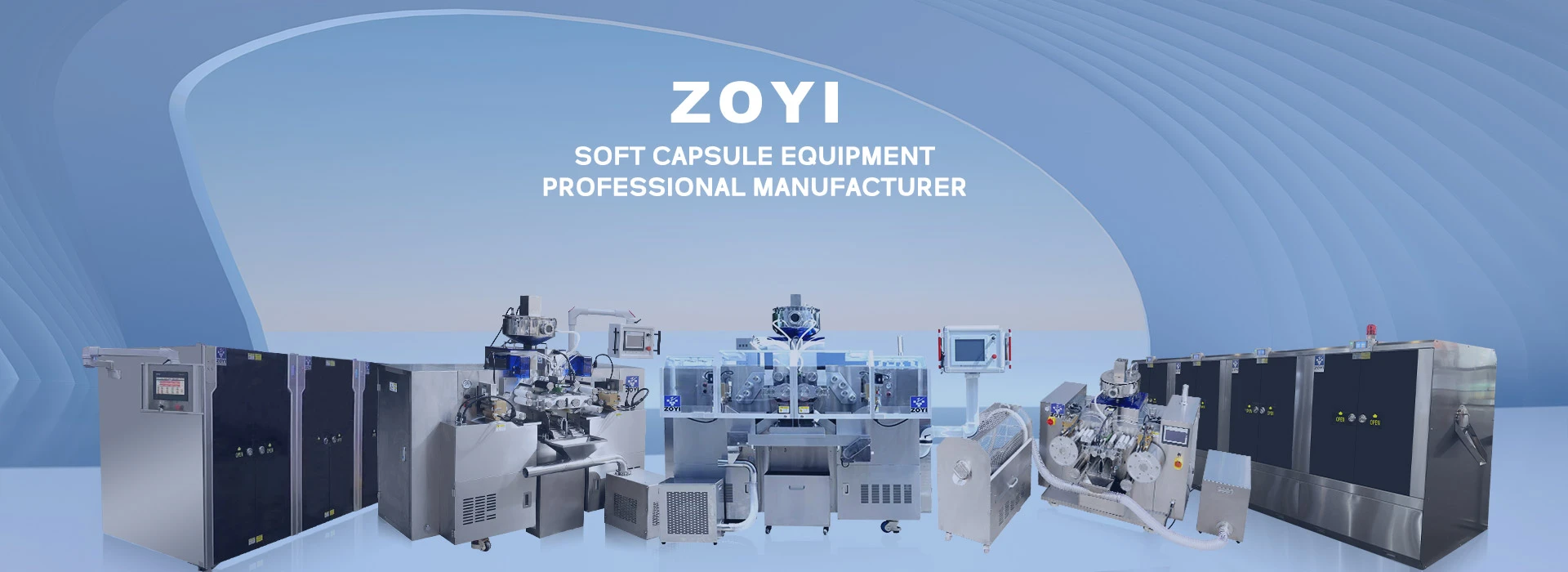
why choose us
Rich Experience
We have advanced technology, perfect assembly process, rich experience of softgel making and worldwide market now.
Reliable Product Quality
We are now devoting ourselves to improving the quality of the softgel encapsulation machines and the softgel making process.
Transparency in the Production Process
We have built our own standardized softgel manufacturing workshop to provide training for our clients. Our clients can see the whole process of softgel making technique.
Excellent Customer Service
With the quick response after-sale service for our customers, we supply technical recipe, plant foundation plan, equipment selection, personnel training and on-site supporting.
What is Colloid Mill Machine
The colloid mill machine consists of stainless steel mill or semi stainless steel materials mill, the basic working principle is that the fluid or semi fluid materials undertake strong cutting force, friction force and high speed vibration through the relative high speed movement between the rotor and stator which make the materials crushed, emulsifying, homogenizing, temperature, so as to obtain satisfactory fine grinding products.
What is Stainless Steel Batching Tank
Metric Roller Chain Sprocket can be used in almost every type of system. Used in conveyor systems such as conveyors, it can transport food, beverages, grain, and other materials from one place to another. Used in the transmission system, it transfers power from a source such as the engine to various components such as the wheels. Therefore, the product is also widely used in fields such as machine manufacturing,agricultural equipment, automobiles, and military equipment.
-
![Vacuum Emulsifier Shearing Equipment]() Vacuum Emulsifier Shearing EquipmentThe vacuum emulsifier shearing equipment achieves emulsification, dispersion, dissolution, and homogenization from simple mixing requirements.
-
![Gelatin Colloid Mill]() Gelatin Colloid MillThe Gelatin colloid mill design is compact and the performance is stable, easy to operate with high efficiency. Gelatin colloid mill is the best choice to process fine material.
-
![Round High Speed Emulsification Tank]() Round High Speed Emulsification TankThe round high speed emulsification tank is one of the advanced mixing equipment, and is widely used in liquid food industries such as dairy products and beverages.
-
![High Speed Emulsification Tank]() High Speed Emulsification TankWhen the high speed emulsification tank is working, the material is thrown into the center of the rotor at a high speed, and the ultra-fine emulsification is realized by the stator tooth gap,
-
![Food Grade High Shear Emulsifying Tank]() Food Grade High Shear Emulsifying TankA series mixer for food grade high shear emulsifying tanks is used to continuously emulsify and disperse various liquids, deliver low viscosity materials, and mix powders and liquids.
-
![Stainless Steel High Speed Emulsification Machine]() Stainless Steel High Speed Emulsification MachineThe stainless steel high speed emulsification machine uses high-speed rotation of the bottom impeller to efficiently process materials under conditions of agitation, pressing and cutting.
-
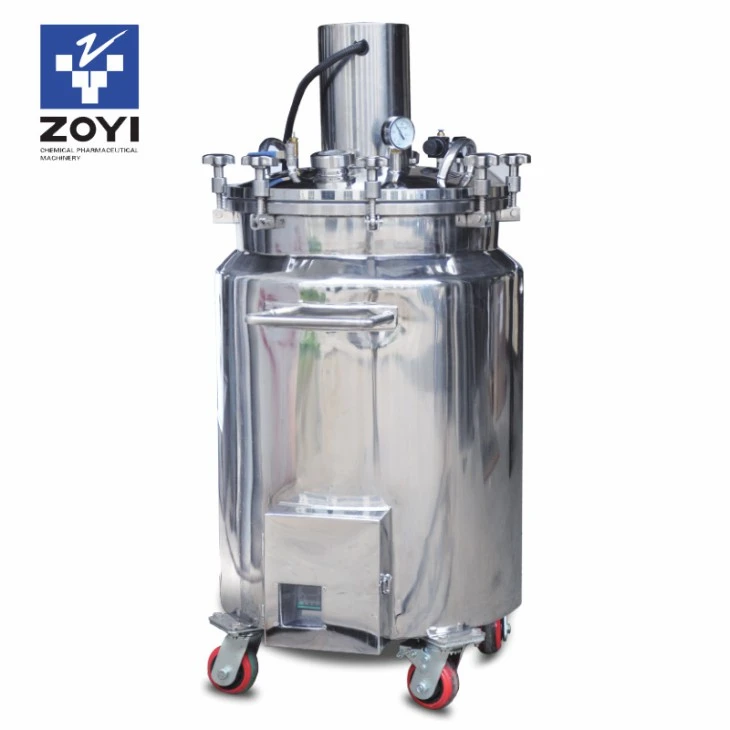
![Stainless Steel Batching Tank]() Stainless Steel Batching TankStainless steel batching tank of open-pot is stirred with liquid capsules of the production process of liquid ingredients, such as sedimentation and mixing processes in the stainless steel batching
-
![Stainless Steel Colloid Mill]() Stainless Steel Colloid MillStainless steel colloid mill is made of high quality stainless steel, which will not rust and be hygienic. The stainless steel colloid mill is compact in structure, stable in operation, low in noise,
-
![Colloid Mill Grinder]() Colloid Mill GrinderIn the case of a pressure equalizer, a colloid mill grinder is the first unit of a centrifugal device. The colloid mill grinder has a simple structure and convenient equipment maintenance, and is
-
![Colloid Mill Machine]() Colloid Mill MachineColloid mill machine is a new type of wet ultrafine particle processing equipment. Colloid mill machine is suitable for homogenization, emulsification, mixing and crushing of various semi-fluids,


Advantages of Colloid Mill Machine
Superfine Grinding and Multifunctional Processing
A colloid mill machine is designed to perform multiple functions in a single process cycle, including superfine grinding, emulsifying, homogenizing, and dispersing. This multifunctionality is crucial in industries where the fineness and uniformity of the processed material are critical, such as in pharmaceuticals and food processing. The ability to perform these operations simultaneously enhances the efficiency of the production process and reduces the need for multiple pieces of equipment.
High Capacity Output and Space Efficiency
The colloid mill machine is noted for its high capacity output, which means it can process large volumes of material in a given time. This is particularly beneficial in industries where high throughput is required. Moreover, despite its high processing capacity, the colloid mill machine requires minimal space, making it an ideal choice for operations where space is a constraint. This compactness also contributes to easier integration into existing production lines.
Ease of Cleaning and Maintenance
The design of the colloid mill machine facilitates easy cleaning, which is essential for maintaining hygiene standards, especially in food and pharmaceutical applications. The ability to clean the mill using solvents or simply flushing with water reduces downtime and ensures that the equipment is ready for the next batch quickly. Additionally, the ease of maintenance, with parts that can be easily dismantled and assembled, reduces the overall maintenance cost and time.
Robust Construction and Quality Materials
The use of high-quality stainless steel for contact parts ensures durability and resistance to corrosion, which is crucial in processing environments where the mill may come into contact with aggressive substances. This robust construction not only extends the lifespan of the equipment but also ensures consistent performance over time.
Modular Engineered Design for Flexibility
The modular design of the colloid mill machine allows for the quick and easy interchangeability of mill chambers. This feature is particularly beneficial as it enables the optimization of manufacturing processes by adapting the mill to specific requirements such as different particle size reductions. This flexibility makes the colloid mill machine a versatile tool in various industrial settings.
Quality Assurance and Safety Features
The colloid mill machine provides excellent particle size reduction and dispersing performance, ensuring high-quality end products. Its suitability for both continuous and batch processes simplifies scale-up from R&D to full production. The rotor safety stop mechanism is a critical safety feature that prevents damage to the equipment and ensures operator safety by ensuring that the rotor never comes into contact with the stator.
Application of Colloid Mill Machine



●Food Industry
Sauces and Dressings: Colloid mill machines are extensively used in the production of sauces and dressings. It is a kind of chilli sauce making machine. Whether it’s ketchup, hot sauce, mayonnaise, or salad dressings, cocoa paste, the mill’s ability to finely disperse and emulsify ingredients ensures a smooth and consistent texture.
Nut Butter: The popularity of nut butter has soared in recent years, and colloid mill machines play a key role in nut butter production. By grinding nuts to a fine consistency, these mills create the creamy and spreadable texture that consumers love.
Bakery Fillings: In the baking industry, colloid mill machines are employed to produce fillings for pastries and confectioneries. Whether it’s fruit fillings for pies or cream fillings for doughnuts, the mill’s precision in particle size reduction ensures a desirable end product.
●Pharmaceutical Industry
Drug Formulations: Colloid mill machines are crucial in pharmaceutical manufacturing, especially for creating suspensions and emulsions. The uniformity achieved in particle size distribution is essential for drug formulations, ensuring accurate dosage and efficacy.
Topical Creams and Ointments: In the production of topical medications, colloid mill machines are used to disperse active pharmaceutical ingredients uniformly. This is critical for achieving consistent therapeutic effects and enhancing the absorption of the medication through the skin.
Vaccine Production: Vaccine manufacturing involves the creation of precise emulsions and suspensions. colloid mill machines contribute to this process by efficiently reducing particle size, aiding in the formulation of vaccines with optimal stability and effectiveness.
●Chemical Industry
Paints and Coatings: Colloid mill machines play a vital role in the production of paints and coatings by dispersing pigments uniformly. This results in a smooth and durable finish, and the ability to control particle size ensures the desired texture and appearance.
Adhesives and Sealants: In the adhesive industry, colloid mill machines are employed to create stable emulsions for various formulations. This is crucial for ensuring the adhesive properties are consistent, whether it’s for bonding wood, metal, or other materials.
●Cosmetic Industry
Creams and Lotions: Colloid mill machines find extensive use in the cosmetic industry for the production of creams and lotions. The ability to create fine emulsions ensures that these products have a smooth texture and are easily absorbed by the skin.
Hair Care Products: Shampoos, conditioners, and hair styling products often require a consistent and fine particle size. colloid mill machines contribute to the production of these products, ensuring the desired texture and performance.

The grinding head, transmission base parts, and motor make up the colloid mill machine. Stainless steel is used for the components that come into touch with the materials. The stator and rotor grinding blades are the most important components. The forms of grinding blades vary depending on the physical properties of the materials. The blade textures are all composed of stainless steel, as well. The motor is developed to meet the unique needs of a colloid mill, and a water blocking plate is installed on the swollen cover of the motor to prevent leaking.
Colloid Mill Machines: How They Compare to High Pressure Homogenizers
Machine Process
The colloid mill machine classification as rotor-stator mixers means that they are comprised of a quickly rotating rotor, which draws a sample up. The sample then gets pushed in a centrifuge-like fashion through a stator, which contains many small slots. The combination of high rpm from the rotor and movement through the tiny slots causes the particles to be mechanically sheared. In contrast, homogenization forces the sample through a narrow space while imparting multiple forces and high pressure to create a consistent and uniform sample.
Sample Composition
Both colloid mill machines and high pressure homogenizers can process liquid/solid combinations, e.g. the sample is comprised of a solid immersed in a liquid suspension or a liquid suspended in another liquid. Either machine can enhance the stability of these types of samples, and can also reduce the particle size of the suspended particles.
Suitable Applications
While colloid mill machines are only suitable for particle size reduction, high pressure homogenizers can be used for particle reduction and more. For example, the homogenizer’s ability to lyse cells stems from the powerful pressure that ruptures even difficult-to-break walls, like bacteria, yeast, and fungi. A variety of industries can benefit from access to either machine; these include the pharmaceutical, cosmetic, and food fields. Yet the homogenizer is also known to work within the chemical, medical, and biotechnology industries, while the colloid mill machine also benefits the paint, soap, textile, and paper industries.
Precautions for Colloid Mill Machine Installation
The equipment should be installed on the flat concrete foundation and fixed with the ground screw (which is not fixed according to the gel grinding work).
Check whether the fastening screws are tightened.
Use a special trigger to turn the rotor with a special trigger to check whether contact with the stator and whether or not the card is dead. If there is any such situation, the machine should not be turned on.
Check and connect the power cord (three-phase alternating current, voltage is 380 volts, body protection grounding) and note that the rotor rotation direction should be aligned with the arrow on the base.
Connect the cooling water and notice the water entry and exit signs of the nozzle.
When starting the motor, first click the switch to check for noise and vibration. If the situation is abnormal, it should stop immediately and try again after troubleshooting.
A colloid mill machine is a machine use to disintegrate solid particles or droplet size of a suspended or emulsion liquid. The machine consist of an inlet (which is subject to tremendous shearing action which effect uniform size time dispersion) and an outlet. colloid mill machine operates on the principle of rotor-stator. The apparatus breaks down materials by forming material dispersion in a liquid. Shearing occurs in a narrow gap between a static cone (the stator) and a fast-turning cone (the rotor).
The rotor and stator are construct with toughened steel or corundum to help reduce wear. A colloid mill machine’s rotor may differ from one machine to another but for all, the operating principle is the same. Each fabricator incorporates specific features that result in operating efficiency changes.
The Colloidal Mill works on the rotor-stator principle. Due to shaving, when the material is pass between the narrow gap of rotor and stator milling surfaces, the size reduction is an effect. A rotor turns 3000-20000 rpm at high speeds. The high hydraulic shear levels applied to liquid disrupting structures in the fluid process. colloid mill machines are often use to enhance the stability of suspensions, emulsions and can also be use to reduce solid particle size in suspensions.
Higher shear rates lead to smaller 1-micron droplets. The particle size is done by modifying the gap between the rotor and the stator based on a rotor that rotate at high speed and very close to a conical stator. Then the resultant is pass through to the area of discharge. The drain pipe removes the colloidal mill from the final product. If the final product has not been shear to the desire size, for further shearing it can be recirculate back to the machine.
The material, though the inlet hopper, place in the mill. Then it passes through the narrow gap between rotor and stator and thus reduces the size of the fine particle. A colloid mill machine is a device that produces hydraulic shear.
The colloid mill machine works to reduce the size of the droplets hanging on. The mill reduces the particle size. The colloid mill machine process is perform by adding the heavier liquid to the chamber of the mill which performs the shearing process. Once the heavier liquid has been added, the lighter material is added to the material to start the mill whether it is a solid mass or a liquid of varying viscosity.
When the molding portion of the function occurs, both materials are stirred together at a high speed within the mill. In other models, the stator remains constant and the rotor will do the function of rotation. It creates the required amount of hydraulic shear to break down the materials.
Factors That Hinder the Use of Colloid Mill Machine
Material properties
Some materials may have properties that make it difficult to be effectively processed by colloidal grinding. For example, certain materials may have high viscosity, hardness, or poor fluidity, which may lead to problems such as insufficient grinding and uneven particle size during the processing of colloid mills.
Grinding parameters
The grinding parameters of the colloid mill, such as speed and pressure, may also affect its processing effect. If the speed or pressure is not set properly, it may lead to insufficient or excessive grinding of the material, affecting the quality and stability of the product.
Temperature
The colloid mill generates a large amount of heat during the treatment process. If the temperature is too high, it may cause material denaturation, agglomeration, and other problems, affecting the treatment effect.
Impurities
If the material contains impurities such as particles, fibers, etc., it may cause uneven grinding and affect the treatment effect.
Equipment maintenance
The maintenance and upkeep of the colloid mill is also an important factor affecting its treatment effect. If the equipment is not maintained and serviced in a timely manner, it may lead to issues such as wear and blockage, which can affect its processing effectiveness.
Operator skills
The skills and experience of operators are also one of the factors that affect the treatment effect of colloid mills. If the operator is not familiar with the use and maintenance of the equipment, it may lead to equipment malfunctions or poor handling effectiveness.
How to Clean a Colloid Mill Machine
Step 1: Preparation Before cleaning, turn off the power supply and unplug the machine. Wear protective gear such as gloves and goggles to avoid contact with chemicals or debris.
Step 2: Disassembly Take apart the colloid mill machine according to the manufacturer’s instructions. Remove the hopper, rotor, stator, and other parts, and place them in a container for cleaning.
Step 3: Pre-Cleaning Using a brush or scraper, remove any visible debris, including product residues, dirt, and other contaminants, from the machine’s parts. You can use compressed air to blow away dust and debris that are difficult to reach.
Step 4: Cleaning Solution Prepare a cleaning solution by mixing warm water with a suitable detergent. Use a non-abrasive and non-corrosive detergent that is compatible with the machine’s material. Avoid using harsh chemicals or bleach that can damage the equipment.
Step 5: Cleaning Soak the parts in the cleaning solution for at least 30 minutes. Use a soft-bristle brush to scrub the parts gently. Rinse the parts with clean water to remove any remaining detergent.
Step 6: Sanitization To eliminate bacteria and other microorganisms, sanitize the colloid mill machine parts by soaking them in a sanitizing solution. Follow the manufacturer’s instructions on the concentration and contact time of the sanitizer.
Step 7: Drying and Reassembly Dry the parts with a clean cloth or air-dry them. Reassemble the colloid mill machine by following the manufacturer’s instructions.
Benefits of Stainless Steel Batching Tanks
Corrosion Resistance
Stainless steel is known for its corrosion resistance property. This is useful especially when you are working with an acidic substance. For instance, beer will rust other metals easily, also adding unwanted metallic flavors to it. Corrosion not only has a detrimental impact when you are preparing beer but also when you are storing it for a long time. This is where stainless steel vessels make a significant difference.
Versatility
These tanks are aimed at processing different material types, with packaging as the next phase of the process. They are designed for effective stirring and moving with an exceptionally great blending technique to improve the mixing process. The use of these stainless steel tanks reduces the amount of task and time while ensuring a smooth production process.
Easy Cleaning
Unlike other metals, stainless steels are easy to clean. Also, it does not react with any metals, acids, and chemicals, it does not develop deposits and patches.
Cost-Effectiveness
While stainless steel may sound expensive, especially when compared with plastic, it is cost-effective in the long run. This is mainly because it does not need special cleaning materials and is low on maintenance. It has a long operational life and is not breakable like glass.
Our Certifications

We have advanced technology, perfect assembly process, rich experience of softgel making and worldwide market now. Besides, we have built our own standardized softgel manufacturing workshop to provide training for our clients. Our clients can see the whole process of softgel making technique. We are now devoting ourselves to improving the quality of the softgel encapsulation machines and the softgel making process.
FAQ
We're professional batching system manufacturers in China, specialized in providing high quality products with low price. We warmly welcome you to wholesale bulk batching system made in China here from our factory.


