

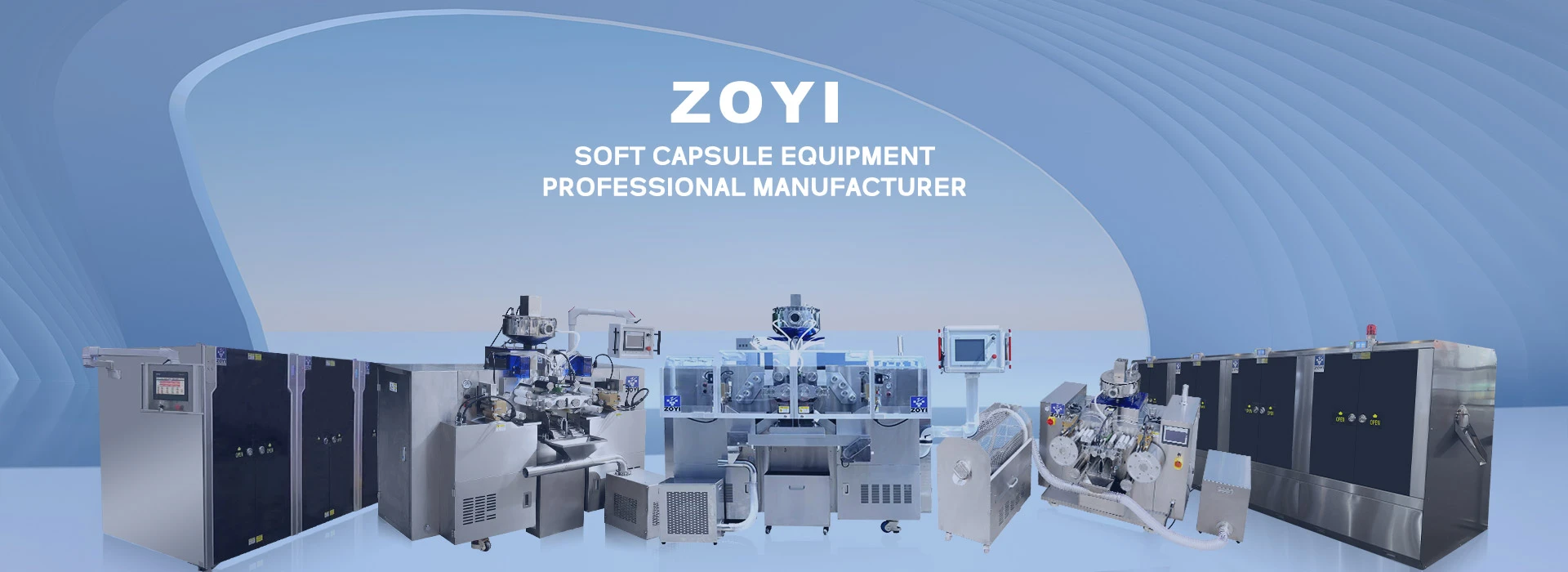
why choose us
Rich Experience
We have advanced technology, perfect assembly process, rich experience of softgel making and worldwide market now.
Reliable Product Quality
We are now devoting ourselves to improving the quality of the softgel encapsulation machines and the softgel making process.
Transparency in the Production Process
We have built our own standardized softgel manufacturing workshop to provide training for our clients. Our clients can see the whole process of softgel making technique.
Excellent Customer Service
With the quick response after-sale service for our customers, we supply technical recipe, plant foundation plan, equipment selection, personnel training and on-site supporting.
What is Pharmaceutical Chiller Unit
The pharmaceutical chiller unit is a refrigeration system that recycles antifreeze and aqueous solutions to help cool various equipment and processes. Pharmaceutical chiller units are the most frequently used in the food and beverage industry.
What is Tumbler Dryer
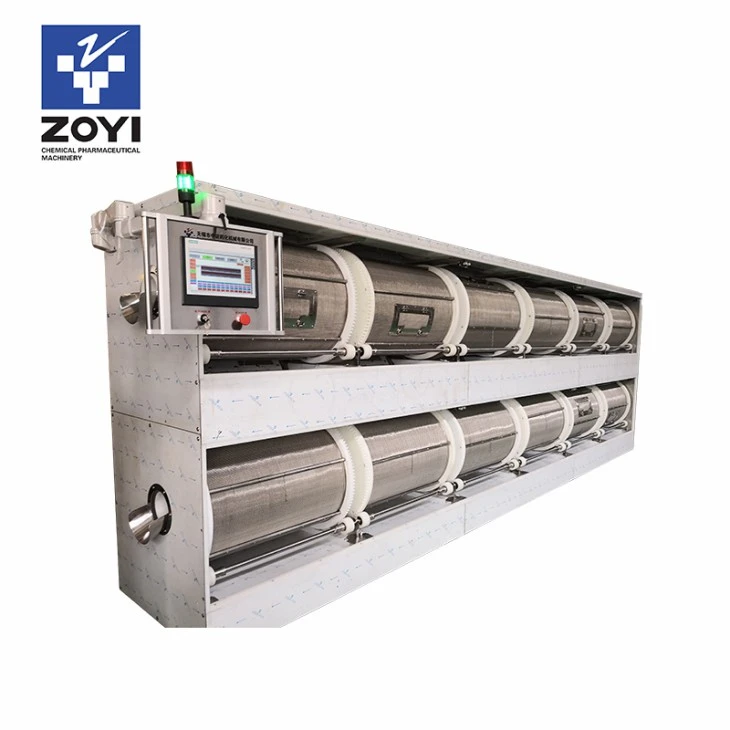
The double-layer capsule traditional tumbler dryer cage rolls on the detachable roller, and is driven by a gear-driven speed reducer through a gear. Double-layer capsule traditional tumbler dryer is controlled by touch screen and PLC, the speed of the inverter speed control cage, high-performance large air volume fan hair shaping, full process timing automatic operation.
-
![Double-layer Tumbler Dryer]() Double-layer Tumbler DryerThe double-layer superposition stainless steel tumbler dryer is based on the same type of products at home and abroad, and the improved structural design is refined.
-
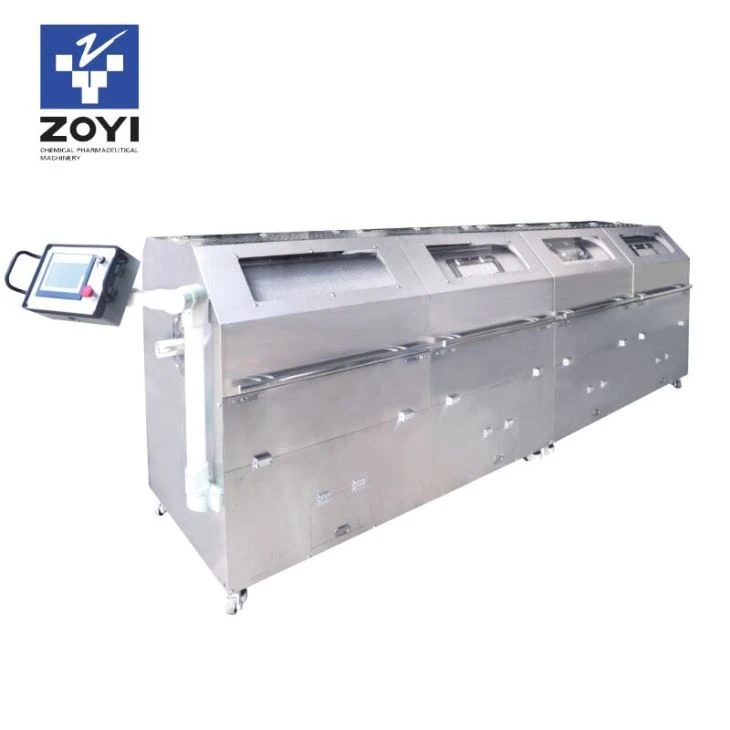
![Intelligent Tumbler]() Intelligent TumblerIntelligent tumble dryer is the new tumble dryer with dehumidification and temperature controlling function.
-
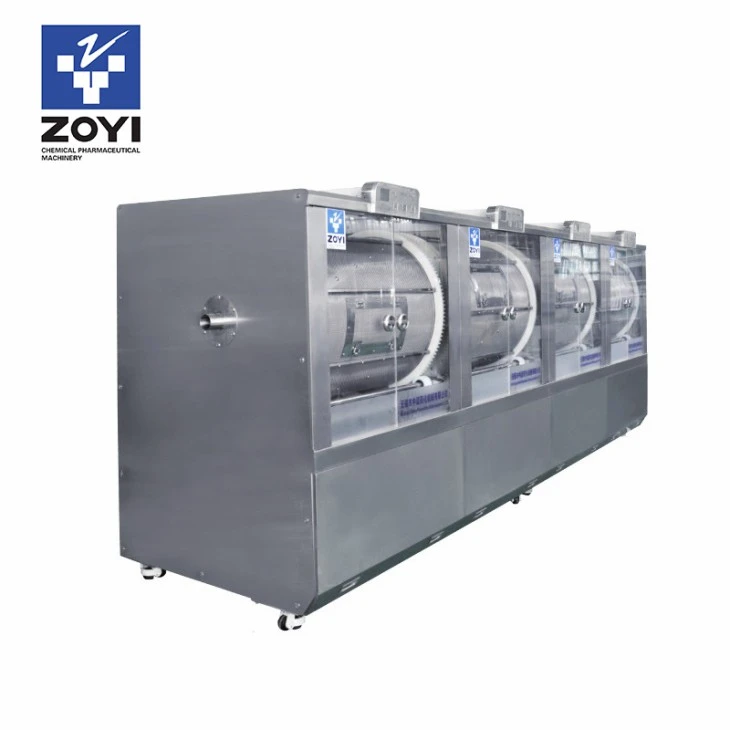
![Tumbler Dryer]() Tumbler DryerThe double-layer capsule traditional tumbler dryer cage rolls on the detachable roller, and is driven by a gear-driven speed reducer through a gear.
-
![PVC Drying Trays]() PVC Drying TraysThe PVC drying trays are made of high quality food grade PVC material with reasonable design and easy accumulation. The PVC drying trays have the advantages of good ventilation, dehumidification and
-
![Plastic Drying Tray]() Plastic Drying TrayThe plastic drying tray is made of PVC material and meets GMP standards. A plastic drying tray is used to dry soft capsules.
-
![Pharmaceutical Chiller Unit]() Pharmaceutical Chiller UnitThe pharmaceutical chiller unit is a refrigeration system that recycles antifreeze and aqueous solutions to help cool various equipment and processes.
-
![Air Cooled Water for Industry]() Air Cooled Water for IndustryAir cooled water for industry ensures high cooling efficiency, low energy consumption, low noise and long service life. Air cooled water for industry cools the tank itself, reducing ambient heat and


Advantages of Pharmaceutical Chiller Unit
Ensuring the Right Temperature During Drug Production
Temperature plays a critical role in the stability and efficacy of drugs. Variations in temperature can lead to the degradation of active ingredients, altering their chemical properties and reducing their therapeutic efficacy. Pharmaceutical chiller units ensure that temperature conditions are maintained within the specified limits throughout the production process, guaranteeing the quality and consistency of the manufactured drugs.
Precise Temperature Control at Different Stages of the Process
The drug manufacturing process often involves a variety of stages that require specific and controlled temperatures. For example, the synthesis of active ingredients may require very low temperatures, while formulation and packaging may require higher temperatures. pharmaceutical chiller units provide the precise temperature control needed at each stage of the process, ensuring that ideal conditions are maintained in all phases of production.
Reducing the Risk of Contamination and Degradation
In addition to ensuring the proper temperature, pharmaceutical chiller units also play a role in reducing the risk of contamination and degradation of drugs. By keeping production and storage areas refrigerated, chillers help prevent the growth of microorganisms and protect drugs against adverse environmental conditions, such as humidity and excessive heat, which can lead to product deterioration.
Energy Efficiency and Sustainability
Pharmaceutical chiller units can also offer benefits in terms of energy efficiency and sustainability. With advances in refrigeration technology, many chillers are now designed to operate more efficiently, reducing energy consumption and operating costs. In addition, heat recovery systems can be implemented to utilize the heat generated during the refrigeration process, contributing to a more sustainable operation.
Types of Pharmaceutical Chiller Unit


Reciprocating
The reciprocating chiller units are a combination of air and water condenser, reciprocating compressor-motor assembly an expansion device along with control panel and wiring, interconnecting refrigerant piping, compressor motor-starter, auxiliaries and oil and refrigerant charge. These are the most common types of chiller units as they have improved a lot over the years. They are quite compact in size and can easily fit through a 30-inch door.
Screw Driven chiller units
Screw-driven chiller units are called positive displacement devices as they compress refrigerants by reducing the refrigerant’s chamber size. These pharmaceutical chiller units with screw compressors usually have capacities of less than 300 tons. The screw compressors squeeze the two rotating helical rotors there compress the refrigerant. One of the advantages of using a screw-driven chiller unit is that its size can be 40% smaller than the centrifugal chiller units. They are also silent during operation because of the fact that they have a rotary motion and fewer moving components.
Centrifugal
After reciprocating chiller units, centrifugal chiller units are the second most common type of chiller units. There are more than 80,000 units of centrifugal chiller units being used in North America. It removes heat from chilled waters with the help of a heat exchanger. The heat is later used to boil the refrigerant and change it into a gaseous state. A centrifugal compressor and a prime mover are the two main components of a compressor assembly. They are non-positive displacement type compressors that are responsible for changing kinetic energy into pressure to increase the refrigerant’s temperature.
Absorption
There is a heat source present in the absorption chiller units to provide them with energy to cool water. These chiller units make use of water as the refrigerant and lithium bromide plays the role of an absorbent. The absorption process is a thermochemical procedure instead of a mechanical one. This process occurs inside a vacuum which permits water to boil at a lower temperature. The heat source is connected to the natural gas or some other indirect source of waste heat, steam or hot water. Absorption chiller units are more efficient than single-effect absorption chiller units. As the double effect absorption chiller units recycle some of the waste produced. Absorption chiller units are built to handle a volume ranging from 4.5 tons to several hundred tons of cooling.
Key Components of Pharmaceutical Chiller Unit

Recall that the compressor’s main job is to increase the pressure of the refrigerant. We see the following types of compressors in pharmaceutical chiller units.
● Reciprocating compressors,
● Scroll compressors,
● Screw compressors, and
● Centrifugal compressors.
Recall that these are categorized based on how they work.Recall that reciprocating compressors are driven by a motor. They work similar to an automobile engine. They are not popular nowadays because of the noise, efficiency, and maintenance issues. They are used in smaller pharmaceutical chiller units up to 100 tons capacity.
Recall that the condenser’s main job is to cool down the refrigerant. The main types of condensers in pharmaceutical chiller units are:
● Fin and tube condenser,
● Microchannel condenser, and
● Shell and tube condenser.
These condensers are classified based on their structure.
Fin and tube condenser is similar to residential air conditioner’s condenser. Recall that fins are made of aluminum, and tubes are made of copper.
The hot refrigerant flows through the tubes, and fins help to cool it by distributing the heat to the outside air. Fins increase the surface area for heat transfer. This cools down the refrigerant inside the condenser.

Recall that the metering device’s job is to decrease the pressure of the refrigerant. pharmaceutical chiller units mainly use the two main types of metering devices:
● Thermal expansion valve, and
● Electronic expansion valve.
We will discuss how these metering devices work in pharmaceutical chiller units in detail.
Recall that the thermostatic expansion valve is also called TEV or TXV. This is used in residential HVAC systems as well as pharmaceutical chiller units. This controls the amount of refrigerant that flows into the evaporator based on the evaporator outlet temperature.
Recall that the evaporator in residential HVAC systems has refrigerant flowing through them. As the room air is blown over the evaporator coils, it gets heated or cooled.
Pharmaceutical chiller units usually contain a shell and tube type of evaporator. Recall that shell and tube evaporator consists of a bundle of copper tubes inside a large metal shell.
In the pharmaceutical chiller units, the evaporator coils filled with refrigerant have water flowing over them instead of air. So the refrigerant cools the water.

Compliance with Strict Regulations
The pharmaceutical industry is subject to rigorous regulations that require compliance with specific quality and safety standards. Pharmaceutical chiller units must meet these requirements and be validated to ensure their compliance with local and international regulations.
Proper Maintenance and Service
Pharmaceutical chiller units require regular maintenance and service to ensure their reliable operation and maintain the quality of the production process. Lack of proper maintenance can lead to system failures and production disruptions, resulting in additional costs and potentially jeopardizing the quality of drugs.
Initial Investment and Operating Costs
The initial investment and operating costs associated with pharmaceutical chiller units can be a challenge for some pharmaceutical companies, especially those operating in emerging markets or with limited financial resources. However, the long-term benefits in terms of product quality and regulatory compliance generally outweigh these initial costs.
Questions to Consider When Looking for a Pharmaceutical Chiller Unit
What is the tesla rating of your component?
If you need a pharmaceutical chiller unit for an imaging machine, knowing the strength of its magnet in Tesla units can help us design a solution specifically to meet its requirements.
What temperature is required?
Medical equipment requires accurate temperature control to improve uptime. We offer capacity modulation without high degrees of compressor cycling to help our recirculation system maintain a precise temperature at +/- 1°F.
What type of refrigerant fluid will you use?
The type of refrigerant you use depends on the temperatures that your pharmaceutical chiller unit will be exposed to. Our systems only use EPA-approved refrigerants as part of our commitment to environmental responsibility.
What flow rate is required?
Pharmaceutical chiller units often require a specialized high-pressure pump to ensure fluids flow through the system effectively as the component is operating. If the pump is not sized for the inevitable pressure drops throughout the process, efficiency and performance will be compromised.
What is the heat load variation
When medical imaging equipment is scanning, the heat load is at 100% and then drops to 10-20% in between scans. We design our pharmaceutical chiller units to handle that wide load variation with elongated run times, so the compressor doesn’t turn on and off while the component is processing.
What is your desired capacity output?
Shifting from a single to a dual circuit pharmaceutical chiller unit system can cut capacity output by as much as half. If lowering output is near the top of your priority list, we’ll help you select an efficient pharmaceutical chiller unit that will help you get the most uptime.
What is your climate?
We design pharmaceutical chiller units for year-round operation in any climate. Understanding your environmental factors such as temperature and humidity can help us engineer the best solution for you.
What level of ‘smart’ control features would you like?
Like the intelligence behind smart-home technology, we offer user-friendly micro-processing solutions that allow you to control your pharmaceutical chiller unit with the touch of a button – no matter where you are. With this option, you could log in remotely, receive text or email alarm alerts, get virtual tech support, and more.
What level of redundancy is required?
Because you measure your effectiveness by uptime, you’ll need a system designed with redundant circuits and other backup systems in mind. Our pharmaceutical chiller units can come with additional redundancy options, such as a city water bypass apparatus, to help keep you up and running.
What is your budget?
Finally, considering your budget will help us tailor a solution especially for you. We have a custom-capable standard product line that allows you to choose in-stock quick-ship items or customize an in-stock item with only the bells and whistles you need.
Types of Tumbler Dryer
Condenser tumble dryer
If you need a tumble dryer that dries you laundry slightly quicker, consider our range of condenser models. Similarly, to heat pump tumble dryers, condenser dryers do not need an externally vented hose, meaning you will be able to install your appliance anywhere in your home. However, a condenser dryer does need a constant supply of cool air to function. When installing your appliance, make sure you place the dryer in a well-ventilated room, where warm air can easily escape.
Heat pump tumble dryer
Using a closed-loop heat exchange system, heat pump tumble dryers dry clothes at a lower temperature, keeping energy usage low and providing better protection for your laundry. Although drying times are slightly longer when compared to condenser tumble dryers, heat pump tumble dryers offer great energy savings, keeping your utility bills to a minimum. A heat pump tumble dryer uses hot air to absorb moisture from your clothes. After this air passes through the drum, it goes through the evaporator, which removes the moisture. This is then collected as condensation and stored in a tank. The remaining air is reheated and used to continue drying your clothes. While both condenser dryers and vented tumble dryers release the hot air used to dry clothes, heat pump technology conserves and reuses it.
Vented tumble dryer
If you are after great drying results on a budget, consider our range of vented tumble dryers. Unlike condenser dryers, which convert hot air into water, vented tumble dryers expel hot air through external vent. This keeps your utility bills to a minimum, as the appliance does not covert hot air into water; it simply expels the air from your home. Although vented tumble dryers are energy efficient, heat pump tumble dryers are the most energy-efficient dryers on the market.
Softgel Tumbler Dryer Market Analysis and Latest Trends
A softgel tumbler dryer is a specialized drying machine used in the pharmaceutical and medical industries to dry softgel capsules. Softgel capsules are made up of a gelatin shell that contains various liquids, such as oils or suspensions. After the encapsulation process, it is essential to dry these softgels to remove any excess moisture and ensure their stability and longevity.
The softgel tumbler dryer operates by gently rolling and tumbling the capsules in a rotating drum, allowing for efficient heat and airflow distribution. This process helps to remove moisture from the softgel capsules without damaging their delicate shells, ensuring high-quality and uniform drying results.
According to market analysis, the global softgel tumbler dryer market is projected to experience significant growth in the coming years. The market is expected to grow at a CAGR of % during the forecast period. This growth can be attributed to several factors, including increasing demand for softgel capsules in the pharmaceutical and nutraceutical industries, rising awareness about the benefits of softgel encapsulation, and advancements in softgel manufacturing technologies.
Furthermore, the market is also influenced by the latest trends in the pharmaceutical and medical industries. One of the key trends is the growing adoption of automated softgel manufacturing processes, which require efficient drying equipment like softgel tumbler dryers. Additionally, manufacturers are focusing on developing advanced softgel tumbler dryers with improved energy efficiency and drying capabilities to meet the evolving demands of the industry.
Benefits of Tumbler Dryer
Safe for Friable Products
The low speed at which tumble dryer operate, usually just a few revolmiton per minutes, makes them ideal for delicate and friable solids such as crystals, macromolecules or agglomerated solids.
Complete Discharge
The simple 45 degree cone allows solids to flow out unobstructed and without assistance of agitation or.
Low Cross Contamination
Because there is only one moving part, the tumble dryer is an inherently simple and clean design, which reduced product hang-up, improved yield and reduced cross contamination. This also make tumble dryer easily Cleaned in Place (CIP) with the addition of a spray nozzle or two.
Complete Discharge - (less heel)
Unlike agitated dryers, tumbler dryer have very little surface area to trap product. The simple 45 degree cone is smooth and has no obstructions to retain product.
Low Temperature Processing
Ideal for products that may be damaged by exposure to excessive heat.
Low Moisture Levels
Drying under deep vacuum will remove more bound moisture than any other drying method. External low elves of moisture, approaching 0% are often required for pharmaceutical, catalysts and polymers.
Enclosed Environment
Active pharmaceutical ingredient, drugs and toxic chemicals are easily isolated in a vacuum dryer. Loading and discharging connections can be automated, sealed and purged for worker protection. The closed system allows the containment and reuse of solvent after removal form the solids.
Reduced Energy
Since the evaporation of the liquid under vacuum occurs at a much reduce temperature, that is the temperature differential is increased (SEE SIDE BAR) , the entire system will operate at a lower temperature which will reduce heat losses and will be safer for operators.
Avoid Oxidation
The vacuum vessel is ideal for avoiding oxidation of chemical and with the addition of an inter gas such as nitrogen, an oxygen free environment can be maintained.
Our Certifications

We have advanced technology, perfect assembly process, rich experience of softgel making and worldwide market now. Besides, we have built our own standardized softgel manufacturing workshop to provide training for our clients. Our clients can see the whole process of softgel making technique. We are now devoting ourselves to improving the quality of the softgel encapsulation machines and the softgel making process.
FAQ
We're professional drying system manufacturers in China, specialized in providing high quality products with low price. We warmly welcome you to wholesale bulk drying system made in China here from our factory.


