Alright, folks! As a supplier of Colloid Mill Machines, I often get asked about the noise reduction technology used in these nifty devices. So, let's dive right in and explore what makes these machines a whole lot quieter.
First off, why is noise reduction even a big deal in a colloid mill machine? Well, if you've ever been around an industrial machine that's running at full tilt, you know how ear - splitting the noise can be. Not only is it annoying for the operators working nearby, but it can also lead to long - term hearing problems. In addition, excessive noise can be a sign of inefficiency in the machine, and it might even indicate some mechanical issues. So, using good noise reduction technology is both a safety measure and a way to ensure the smooth operation of the colloid mill.
One of the key noise reduction technologies used in colloid mill machines is sound - insulating enclosures. We've found that enclosing the noisy parts of the colloid mill within a well - designed enclosure can make a world of difference. These enclosures are typically made of materials that are good at absorbing and reflecting sound waves. For example, some enclosures use thick rubber mats or special acoustic foams on the interior walls. When the machine operates, the sound waves hit these materials, and instead of bouncing around freely and making a racket, they're absorbed or redirected. This reduces the amount of noise that escapes the enclosure and reaches the surrounding environment.
If you're interested in our range of different types of colloid mills, like the Gelatin Colloid Mill or the Stainless Steel Colloid Mill, you'll find that many of them come equipped with these sound - insulating enclosures. They're designed to fit snugly around the active components of the mill, providing a barrier between the noisy parts and the outside world.
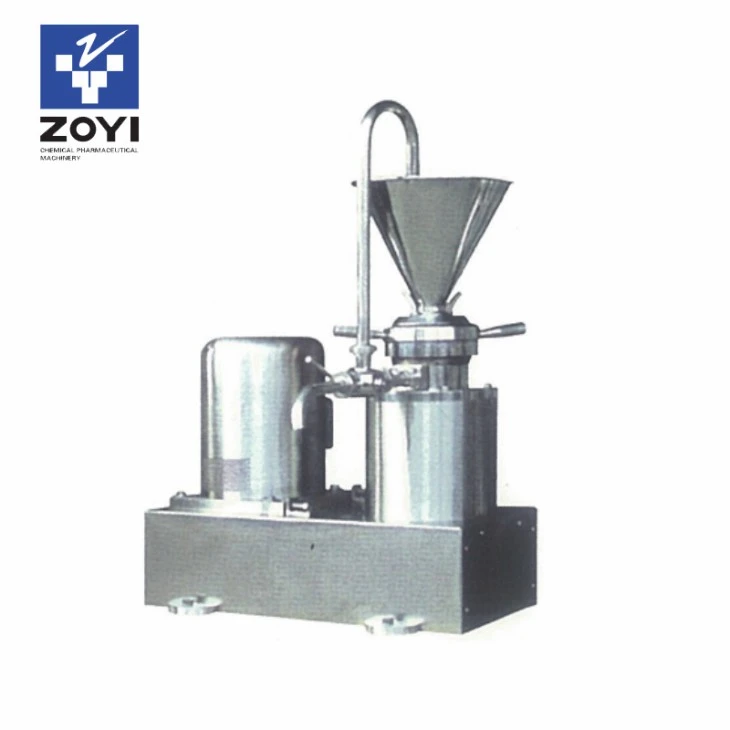
Another important aspect of noise reduction is the design of the milling components themselves. In a colloid mill, the rotating parts, such as the rotor and stator, are major sources of noise. How the rotor and stator are designed can have a huge impact on the noise level. Modern colloid mills are engineered to have smooth and precisely machined surfaces on these rotating parts. When the surfaces are smooth, there are fewer vibrations and less friction as the materials are being processed. These vibrations and frictions are what often create the loud, buzzing or grinding sounds associated with older - style colloid mills.
We've invested a lot of time and resources into perfecting the design of the Colloid Mill Grinder. Our engineers work hard to ensure that the rotor - stator combinations are optimized for both performance and noise reduction. By using advanced machining techniques and high - quality materials, we can create components that operate quietly while still delivering excellent grinding and homogenizing results.
Vibration isolation is yet another vital technology in noise reduction for colloid mill machines. Vibrations are often the root cause of the noise because they're transferred through the machine's structure and then radiated as sound. To combat this, we use vibration - isolating mounts. These mounts are usually made of rubber or other elastic materials that can absorb and dampen the vibrations generated by the machine's operation. When the colloid mill is placed on these mounts, the vibrations are contained, and they don't spread as easily to the surrounding surfaces. This, in turn, reduces the amount of noise that's produced.
Imagine the difference between a colloid mill placed directly on a hard concrete floor and one that's sitting on vibration - isolating mounts. The one on the mounts will be significantly quieter because it's not simply transmitting all those vibrations into the floor and creating a loud, resonating noise. It's like the difference between a drum being played on a soft cushion versus a hard metal table – the cushion absorbs the energy and makes the sound much less intense.

Maintenance also plays a role in keeping the colloid mill machine quiet. Over time, parts can wear out, and misalignments can occur, both of which can lead to increased noise levels. That's why it's so important to have a regular maintenance schedule. This includes things like checking and replacing worn - out bearings, tightening loose bolts, and ensuring that all the components are properly lubricated. A well - maintained colloid mill is not only more efficient but also much quieter.
As a supplier, we're always looking for ways to improve the noise reduction technology in our Colloid Mill Machine. We stay up - to - date with the latest research and development in the field, and we're constantly experimenting with new materials and designs. We understand that our customers want machines that are not only high - performing but also quiet enough to be used in various working environments.
If you're in the market for a colloid mill and noise reduction is a priority for you, you've come to the right place. We have a wide range of colloid mill machines that incorporate the latest and greatest noise reduction technologies. Whether you need a machine for a small - scale operation or a large - industrial setup, we can provide you with a solution that meets your needs.
Don't hesitate to reach out to us if you have any questions or if you're interested in learning more about our products. We'd be more than happy to discuss your specific requirements and help you find the perfect colloid mill machine for your business. Let's work together to make your production process quieter, more efficient, and more enjoyable!