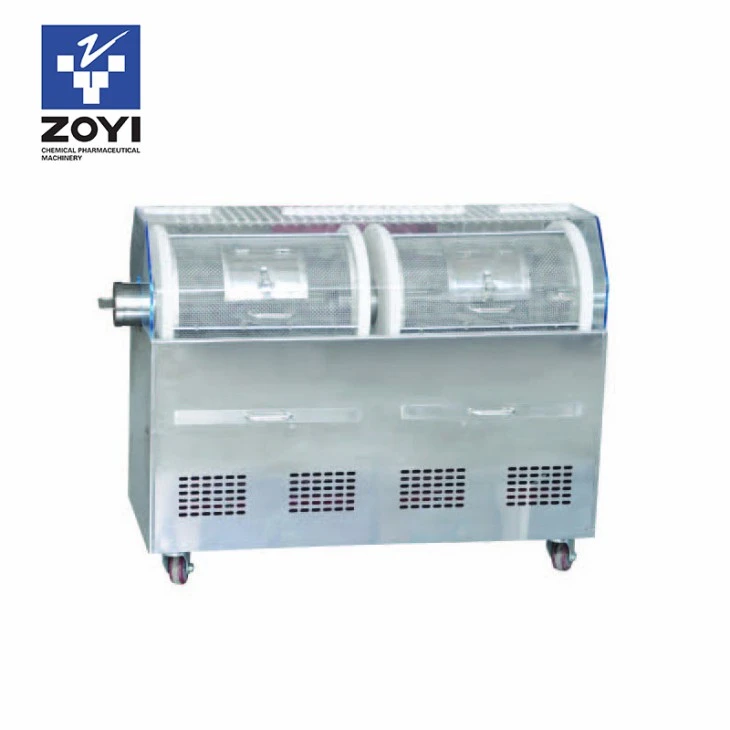
If you're researching how much a soft capsule production line costs, you're probably not just looking for a number. You're balancing upfront investment, long-term efficiency, product quality, and scalability-all while trying to avoid the common pitfalls of overpaying for features you don't need or underbuying for growth. As a soft capsule production line supplier with years of working with pharma brands, nutraceutical manufacturers, and contract development and manufacturing organizations (CDMOs), I've seen how cost variances here can make or break a new product launch. Let's break this down realistically, with actionable insights tailored to what actually drives pricing, not just generic industry stats.
First, it's critical to stop thinking of "a soft capsule production line" as a one-size-fits-all machine. The price swings wildly based on three core factors: automation level, production capacity, and compliance requirements. I've had customers come to me looking for a "cheap softgel production line" only to realize their output needs to double in 18 months, and their budget barely covered a semi-automatic system that can't scale. Let's start with automation, since that's the biggest initial divide.
Semi-automatic soft capsule making machines are the entry point for small businesses or labs testing new formulations. These lines require manual input for steps like gelatin layer preparation, capsule feeding, and partial quality checks, so their production capacity is lower-usually 10,000 to 50,000 capsules per hour. As someone who's walked dozens of clients through this, I'll be honest: semi-automatic systems make sense if you're a startup doing small-batch trial runs or a niche brand with annual output under 50 million capsules. Their price point typically ranges from $15,000 to $50,000. Wait, that's a huge gap-why? Because a basic semi-automatic might only handle single-color softgels for basic supplements, while a slightly upgraded one works for multi-color or liquid-filled capsules with basic cGMP compliance. If you're on a tight budget and just testing the market, this is often the starting point. But if you're planning to scale fast, you'll outgrow it in a year, wasting money on a second system. For more details on entry-level options, check out the semi-automatic capsule making machine page here.
Next, moving to fully automated systems, which are the workhorses for mid-sized and large manufacturers. The mid-range fully automated softgel production line, designed for daily output of 500,000 to 2 million capsules, costs between $200,000 and $600,000. This bracket includes most standard configurations: rolling mold technology, integrated drying and tracking systems, and basic cGMP compliance. The name-brand components-like high-precision rolling molds that reduce capsule defects, or automated dusting and polishing stations-are what drive the price here. For example, the RJWJ-250G rolling mold soft capsule machine, a popular mid-range model, falls right in this $200k to $600k range. It's built to handle consistent, high-quality softgels with minimal operator oversight, so you can shift staff to formulation or sales rather than manual capsule handling. If you're growing beyond small batches but don't need the maximum capacity yet, this is a solid sweet spot. For a deep dive on this specific model, visit the RJWJ-250G rolling mold soft capsule machine page.


At the upper end, ultra-high-capacity automated lines are made for large pharma companies, big nutraceutical brands, or CDMOs that need to produce 2 million to 10 million+ capsules per hour. These lines aren't just faster-they're fully integrated, with in-line quality control (QC) that uses AI to detect defects (like capsule leaks or misshapen shells), batch tracking systems for full traceability, and advanced environmental controls to maintain gelatin stability. Unsurprisingly, this bracket costs $700,000 to $2 million+. The biggest differentiator here is compliance: if you're manufacturing for regulated markets like the U.S. or EU, these lines have validated processes and documentation to pass FDA inspections without delays. I recently worked with a client expanding from small-batch to national distribution who initially tried to cut corners on this, only to have their batch rejected at a customs inspection-costing them $120k in rework and lost launch time. Investing in a validated line isn't just about speed; it's about avoiding costly compliance mistakes. For premium, high-throughput options, the intelligent soft capsule machine line offers next-level automation and traceability for regulated markets.
Wait, but there are other hidden costs that no supplier (including me) likes to highlight upfront. The machine itself is only 60-70% of the total cost of setting up a soft capsule production line. Let's break those extras down: first, auxiliary equipment. You need gelatin melters, storage tanks, drying chambers, capsule sorting systems, and packaging lines (blister packs, bottles, etc.). A drying system alone can add $20k to $100k to your total. Then there's installation, training, and maintenance. Most suppliers offer on-site installation and operator training, but premium lines come with 24/7 support, which adds to the cost. For example, a mid-range line that has basic training included might charge $5k extra for advanced training for QC and maintenance teams. Finally, raw material supply: gelatin, active pharmaceutical ingredients (APIs), and packaging materials. A line running 24/7 will go through hundreds of kilograms of gelatin per month, so locking in reliable suppliers is part of the total cost calculation.
Another factor that changes price is customization. If you're making softgels with unique features-like enteric coating, delayed release, or multi-layer shells-you'll need specialized tooling or software upgrades that add 10-25% to the base machine cost. For example, a softgel production line that can handle multi-layer capsules is more complex, so it's pricier than a standard single-layer line. I always advise clients to map out their specific product needs before buying, not just generic capacity. If you only need single-layer softgels, don't pay extra for multi-layer capabilities you'll never use.
Let's talk about value, not just sticker price. A lower-cost semi-automatic line might seem like a deal, but if it has a 70% defect rate and requires 2 operators per shift, your per-capsule cost will be way higher than a slightly more expensive automated line with a 5% defect rate and 1 operator per shift. I use this rule of thumb with all my clients: calculate total cost per capsule (machine cost + labor + maintenance + raw materials) over 5 years, not just the upfront price. That's where a quality line pays for itself. For example, a $250k automated line with a 5-year lifespan, 100 million capsules produced annually, $0.01 per capsule in labor and maintenance, would cost $0.005 per capsule for the machine, totaling $0.015 per capsule. A $50k semi-automatic line would add $0.02 per capsule in extra labor and defects, making the total per capsule $0.025-25% more expensive over 5 years.
I also want to address common myths. Some people think imported lines are always more expensive, but that's not true if you work with a reputable supplier that handles compliance and local support. Many of the lines I offer are designed for global markets, with FDA and CE documentation, so you avoid the hidden costs of local modification. Another myth: used lines are a good deal. I strongly advise against buying used, unless it's from a verified supplier with a full refurbishment and warranty. Used lines often have outdated compliance documentation, hidden wear and tear, and no support, leading to costly downtime. I once had a client buy a used line from a third-party seller that broke down 3 months after installation, and replacement parts cost twice the price of a new entry-level line.
So, to wrap this up: a soft capsule production line costs between $15,000 and $2 million, depending on automation level, capacity, customization, and compliance needs. The sweet spot for most growing brands is the mid-range fully automated line, priced between $200,000 and $600,000, that balances capacity, quality, and compliance. The worst mistake you can make is buying the cheapest option without mapping your long-term needs, leading to costly reworks or under capacity. Whether you're a startup testing the waters or an established brand scaling, the right line will grow with your business.
If you're ready to explore options tailored to your production needs, or want a detailed breakdown of costs for your specific capsule type and output, feel free to connect with our team. We can walk you through different configurations, highlight hidden costs to avoid, and help you find a line that fits your budget and growth goals. To learn more about our full range of soft capsule production lines, visit the soft gelatin capsule production line page.