If you're a soft capsule manufacturer-whether you're launching a new line, upgrading an existing one, or switching suppliers to boost efficiency-you already know that regulatory compliance isn't just a box to check. It's the backbone of producing safe, consistent, and market-acceptable soft gels, from omega-3 supplements and liquid vitamins to prescription drugs and herbal remedies. As a supplier of soft capsule production lines, I've spent years walking clients through the maze of global regulations, and the truth is: requirements aren't one-size-fits-all, but they boil down to core standards that apply to every step of soft capsule manufacturing, from raw material intake to final packaging. Let's break down what you need to know, with specific context for the equipment you'll rely on to stay compliant.
First, it's critical to align your line with the regulatory body you're targeting. The two most prominent markets today are the U.S. (governed by the Food and Drug Administration, FDA) and the European Union (EU, governed by the European Medicines Agency, EMA for pharma products and EFSA for supplements). Even if you only sell domestically now, planning for future expansion means designing your line to meet international benchmarks, not just local rules. That starts with equipment qualification-something many new operators overlook, but it's non-negotiable for regulators.
Let's talk about equipment first, because your machines are the foundation of compliance. The soft encapsulation filling machine is the workhorse of any line; it's where your liquid or semi-solid formulation is metered into the soft gelatin shell with pinpoint accuracy. For FDA compliance, this machine needs to meet 21 CFR Part 11 (for electronic records and signatures, if you use automated data collection) and 21 CFR Part 111, which governs current good manufacturing practices (cGMP) for dietary supplements. For EMA, that translates to Annex 15 of the EudraLex Volume 4 guidelines, which outlines qualification protocols for manufacturing equipment. That's why I always recommend clients vet equipment suppliers for documentation that proves their machines meet these standards. For example, our automatic soft gelatin encapsulation machine is designed with cGMP in mind: its contact parts are made of 316L stainless steel (easy to sanitize, no leachables that could contaminate your product) and it has built-in metering precision that reduces batch variation, a key requirement for consistent soft gel dosage.
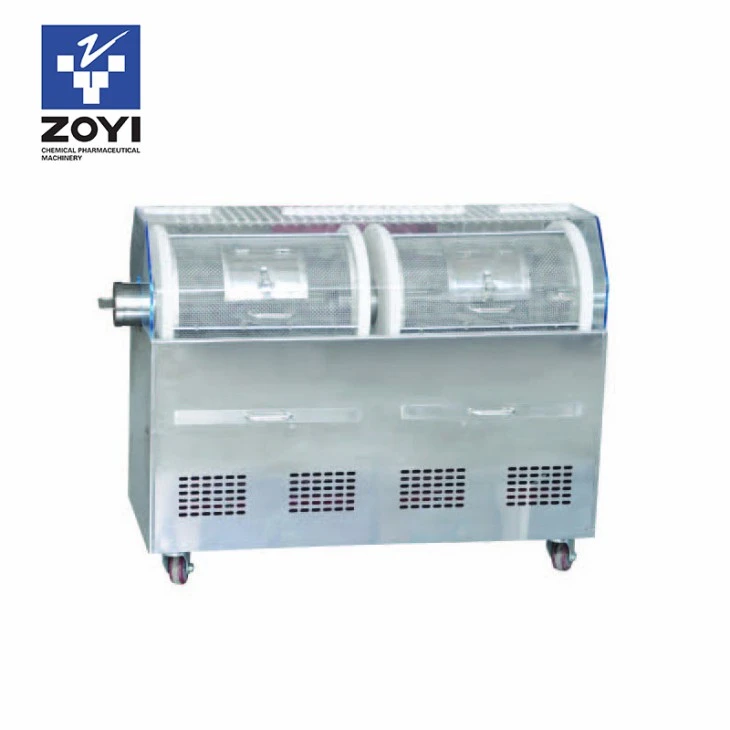
Next, if you're building a full production line, you'll want to look at a soft gelatin encapsulation line, which integrates the filling machine with shell preparation, die forming, drying, and inspection stages. A fully integrated line isn't just faster-it reduces the risk of cross-contamination between steps, which is a major red flag for regulators. Let's take the RJWJ-15G Rolling Mold Soft Capsule Machine as an example: this unit is designed for mid-to-high volume production, with rolling molds that create uniform soft gels with consistent seal integrity. Regulators care about seal integrity because gaps or weak seals can lead to product leakage, contamination, or potency loss. The RJWJ-15G's precision mold alignment is tested to ensure 99% seal integrity, which means fewer rejected units and a clean audit trail for regulators to review during inspections.
One common mistake small manufacturers make is underinvesting in equipment that's scalable. If you're launching a new line for small-batch supplements, a fully automatic small soft gel capsule machine might be the perfect starting point. It's designed for lower volume runs, so you don't pay for capacity you won't use, but it still meets the same core regulatory requirements as high-volume lines. That means it has built-in controls to track batch numbers, production dates, and process parameters-data that's mandatory for cGMP compliance. For example, when you run a batch with the fully automatic small soft gel capsule machine, every step (shell temperature, fill volume, conveyor speed) is logged automatically, so you can pull up a complete batch history in minutes during an FDA or EU inspection. No more digging through paper records; that's a huge plus for compliance.
Now, let's dive into the specific regulatory requirements that apply across the entire production process, not just equipment. First, raw material qualification. Soft capsules have two key raw materials: the gelatin shell (or alternative, like vegetarian cellulose for vegan soft gels) and the fill formulation. Regulators require that you have a Certificate of Analysis (CoA) for every batch of raw materials, proving they meet specifications. For gelatin, that means testing for purity, moisture content, and heavy metals-since contaminants here can end up in your final product. For fill formulations, if you're making a supplement, EFSA or FDA will require that ingredients are on their approved ingredient lists; for pharma products, the EMA or FDA will want you to prove the fill's stability over the shelf life of the capsule. Your line needs to have dedicated, labeled storage areas for raw materials (separate from finished goods and waste) and processes to verify that only approved materials are used. That's where line design comes in: a well-engineered soft gelatin encapsulation line is designed to prevent cross-contamination between raw materials, with separate sections for shell preparation, fill handling, and finished goods processing.
Process validation is another non-negotiable regulatory step. Process validation means proving that your production process consistently produces a product that meets all specifications (potency, dosage uniformity, purity) every single time. For soft capsule lines, this means validating every critical step: shell formation, fill metering, sealing, drying, and inspection. For example, if you use a soft encapsulation filling machine, you'll need to run three consecutive production batches (under "normal" operating conditions) and prove that 100% of samples meet dosage weight requirements, seal integrity, and dissolution rates. Regulators don't care if your line works once; they need to know it works every time. That's why choosing equipment that has validated protocols built-in is a big win. A lot of new operators try to validate their process themselves, only to fail because their equipment wasn't designed for precision-they get inconsistent fill volumes, leading to failed validation runs, delays in launching, and additional costs. As a supplier, we work with clients to provide equipment validation packages tailored to our lines, including factory acceptance testing (FAT) and site acceptance testing (SAT) documents that regulators recognize, making the validation process smoother for your team.
Cleaning and sanitation procedures are another major regulatory focus. Soft capsule lines, especially those that handle liquid fills, can harbor bacteria or residue if not cleaned properly. FDA's cGMP requires that you have written sanitation SOPs (standard operating procedures) and that you prove those SOPs work. That means swab testing your line's contact parts after cleaning to check for residual fill or gelatin, and maintaining records of every cleaning event. The good news is that modern soft capsule equipment is designed for easy cleaning. For example, our automatic soft gelatin encapsulation machine has quick-disconnect parts that can be removed and sanitized in minutes, without needing special tools. The RJWJ-15G Rolling Mold Soft Capsule Machine has self-draining chambers that prevent water or residue buildup during drying, which reduces the risk of microbial growth between batches. Smaller lines, like the fully automatic small soft gel capsule machine, have compact designs that are easier to clean than large, complex high-volume lines, which is a huge benefit for small manufacturers who might not have a dedicated sanitation team.
Documentation and record-keeping are maybe the most tedious, but equally important, regulatory requirements. Regulators expect you to keep detailed records of every step of production, from raw material intake to final packaging and distribution. That means batch records (BRs) that include: raw material lot numbers used, process parameters (shell temperature, fill pressure, conveyor speed), inspection results, and any deviations from standard operating procedures. For FDA, these records need to be retained for at least two years after the expiration date of the product; for EMA, pharma records need to be kept for at least five years, supplements for three. A lot of older production lines rely on paper records, which are easy to lose, messy, and hard to review during an inspection. That's why many clients upgrade to lines with integrated data management systems that automatically log all process data. For example, the soft gelatin encapsulation line I mentioned earlier connects to a central database that stores all batch records, so you can pull up a complete history of any product in seconds. This not only makes compliance easier, but it also helps you identify process issues before they become major problems-like a gradual drop in fill volume that could lead to potency issues.
There are also market-specific nuances that you need to plan for. If you're selling to the U.S., FDA requires that your product meets the requirements of the Federal Food, Drug, and Cosmetic Act (FD&C Act). For prescription soft capsules, that means you'll need to file a New Drug Application (NDA) or Abbreviated New Drug Application (ANDA), depending on whether it's a generic. For over-the-counter (OTC) drugs, you'll need to meet OTC monograph requirements. For supplements, you don't need pre-approval from FDA, but you do need to ensure that your claims are truthful and not misleading, and that your product meets cGMP. If you're selling to the EU, EMA requires that pharma products have a Marketing Authorization Application (MAA), and supplements need to be notified to the relevant national authority in each EU country, with proof of compliance with EFSA guidelines. That means your line needs to be designed to meet the specific requirements of each market-for example, EU regulators are stricter on certain excipients (ingredients in the shell or fill) than some other markets, so your equipment needs to handle those excipients without cross-contamination.
A common question I get from clients is: "What if I'm making vegan soft capsules instead of gelatin-based ones?" The same core regulations apply, but there are small differences. Vegan soft capsules use materials like hydroxypropyl methylcellulose (HPMC) instead of gelatin, so you'll need to validate that material's stability, purity, and compatibility with your fill formulation. The good news is that most modern soft capsule lines, including the fully automatic small soft gel capsule machine, can be adapted to run HPMC-based shells, as long as you adjust the shell preparation parameters (temperature, humidity) to match the material's specifications. We provide training to our clients on how to adjust line settings for different shell types, so you don't have to invest in a whole new line if you want to switch to vegan products later.
Now, let's talk about common pitfalls that trip up new soft capsule manufacturers. The first is cutting corners on equipment qualification. I've seen clients buy a cheap, unvalidated line to save money, only to fail their first regulatory inspection and have to replace the whole line. Another pitfall is not planning for scalability: a small line that works for 10,000 capsules a day might not be enough when your product takes off, so choosing a line that can be upgraded (like adding more drying capacity or inspection modules) is a smarter long-term investment. Also, don't overlook training: your operators need to know how to run the line, validate processes, and maintain records correctly. We provide comprehensive on-site training for all our lines, so your team is confident and prepared for regulatory audits.
At the end of the day, regulatory compliance for soft capsule production lines is about two things: making safe, high-quality products, and being able to prove that you're doing it every step of the way. The right equipment is your biggest ally here, because it reduces human error, provides consistent data, and streamlines processes like cleaning and validation. Whether you're a small startup looking for a fully automatic small soft gel capsule machine to launch your first product, or a mid-sized manufacturer needing a high-volume soft gelatin encapsulation line to meet growing demand, choosing a line that's designed with compliance in mind will save you time, money, and stress in the long run.
If you're ready to learn more about how our lines can support your regulatory goals, or want to discuss specific requirements for your product or target market, we're here to help. Our team has worked with manufacturers across the globe, from small supplement startups to large pharma companies, and we can help you select the right equipment, navigate validation, and build a compliant soft capsule production line that fits your needs.